← All projects

Digital Product / PropTech

RentRight

A renter-first platform that turns scattered rental records into a structured, timestamped evidence trail.

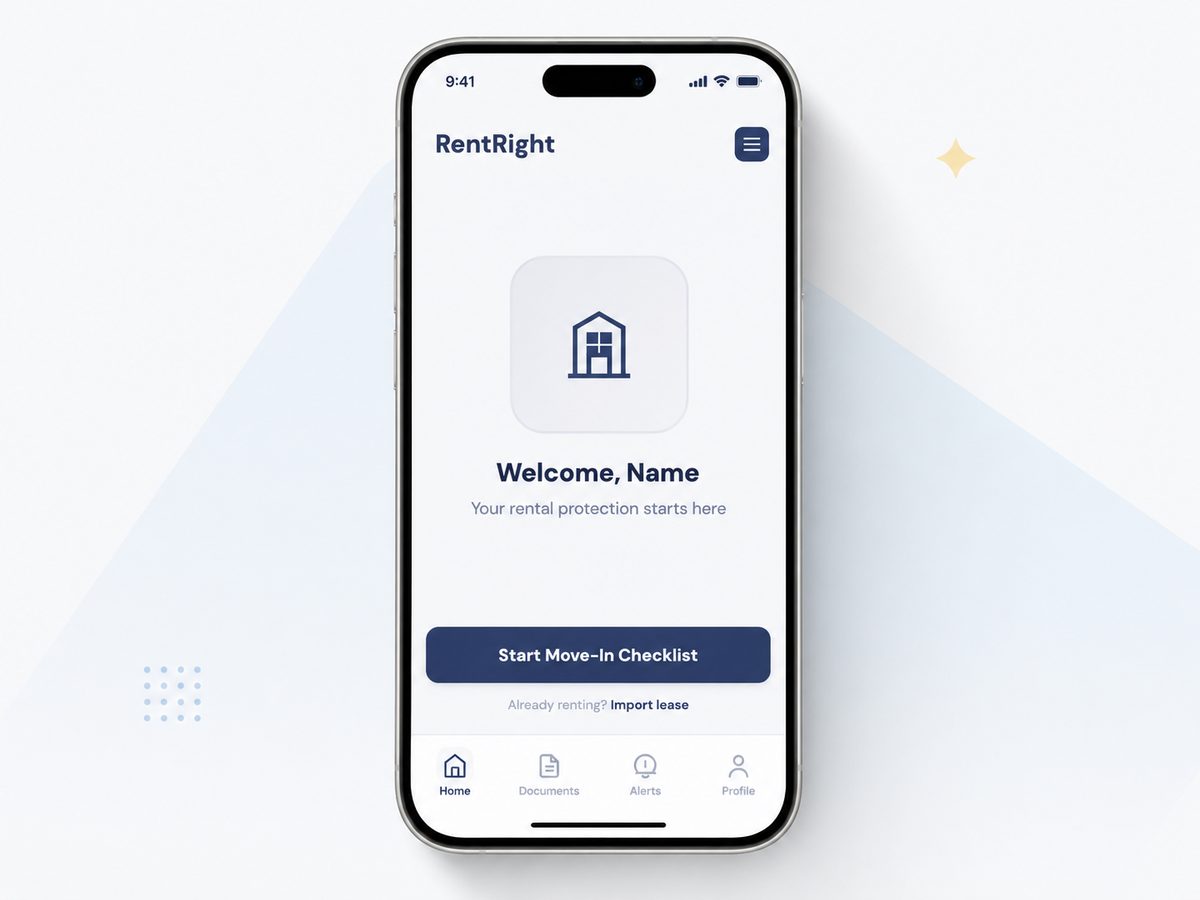
Interactive prototype of the P0 Record → Store → Export workflows.

RentRight — Digital Product / PropTech
01

Overview

RentRight is a renter-protection platform designed to help tenants document what happens throughout a lease — from move-in condition to maintenance, communications, bills, and disputes — in one structured record.

I focused on market analysis, competitive positioning, and product definition, then helped translate the team’s 20 interviews into prioritized use cases, requirements, and a working prototype.

Role
Product Management · Market Research · Product Definition
Timeline
Spring 2026 · EMGT 6700
Team
4-person product team
Tools
Figma · MRD/PRD · Prioritization Frameworks
Scope
Research → positioning → use cases → requirements → prioritization → prototype
02

Problem

How might we help renters build a reliable record of their rental experience before a dispute happens?

Renters often rely on a mix of photos, texts, emails, screenshots, bills, and memory to document what happens during a lease. The problem is not that the information does not exist — it is that it lives in different places, is difficult to organize, and becomes hard to use when a dispute happens.

Our research showed that renters were already building their own workarounds with screenshot folders, spreadsheets, Notion, and Google Docs, but these systems were incomplete and difficult to reconstruct later.

RentRight was designed around a more proactive model: create a renter-owned timeline as the lease unfolds, with timestamped move-in evidence, issue records, communication logs, bills, and exportable dispute documentation.
03

Research to Product Direction

  • Research finding 01

    Rental evidence is fragmented across too many tools.

    Product decision

    Create one renter-owned record that combines photos, issue history, communication logs, and supporting documents.

  • Research finding 02

    Documentation often happens too late — after a dispute has already started.

    Product decision

    Make documentation proactive through guided move-in capture, ongoing issue logging, and automatic timestamps.

  • Research finding 03

    The strongest first-use value comes from building a usable evidence trail, not from solving every rental problem.

    Product decision

    Prioritize the core Record → Store → Export loop before adding monitoring, legal education, or landlord-side features.

04

Key Decisions

D01

Start the product at move-in, not at the moment of dispute.

Why
The value of the evidence trail depends on records being created before a conflict exists.
Tradeoff
Users must see value before they feel immediate pain.
Result
The first interaction becomes a guided move-in checklist rather than a dispute-resolution flow.
D02

Define the first release around Record → Store → Export.

Why
These three functions create one complete value loop: capture evidence, preserve it, and make it usable.
Tradeoff
Maintenance tracking, bill monitoring, legal education, and landlord collaboration move later.
Result
The first release tests whether renters will proactively build a dispute-ready record.
D03

Keep RentRight renter-owned rather than landlord-controlled.

Why
Most existing property-management platforms treat the tenant as a secondary user, while the documentation remains controlled by the landlord side.
Tradeoff
Landlord participation and shared workflows become harder to establish early.
Result
The product stays centered on renter-owned records, timestamps, and exportable evidence.
05

Prototype

The prototype demonstrates how RentRight builds an evidence trail over time rather than only responding when a dispute begins.

Live prototype

The live build walks the renter flow end to end: guided move-in capture, an ongoing record of issues and communications, and an exportable evidence package.

Open live prototype ↗

Interactive prototype of the P0 Record → Store → Export workflows.

Record

Guided move-in photos and issue logging with automatic timestamps.

Store

A chronological, renter-owned record combining maintenance, communication, and uploaded documents.

Export

A structured evidence package that can be shared during a dispute.

06

Outcome / Reflection

What the project established

  • A clear product position around proactive, renter-owned documentation
  • 5 priority use cases from 20 interviews
  • A P0 Record → Store → Export value loop
  • MRD / PRD and prioritized roadmap
  • A working prototype of the core renter flow

Success metrics

North star
Move-in checklist completion within 7 days.
Supporting
Evidence package export rate · 30-day retention · issue logging rate

These are the success metrics the project defined for a first release, not results measured with users.

What still needs validation

  • Whether renters will document proactively before a dispute happens
  • Whether the evidence trail improves renter confidence or dispute outcomes
  • Whether landlord participation is necessary for the product to create value
Product learning
The real product opportunity was not another rental-management tool. It was giving renters ownership of a structured evidence trail before they need it.
What I'd do next
Test whether renters consistently complete the Record → Store → Export loop before expanding into monitoring, legal guidance, or property-management workflows.